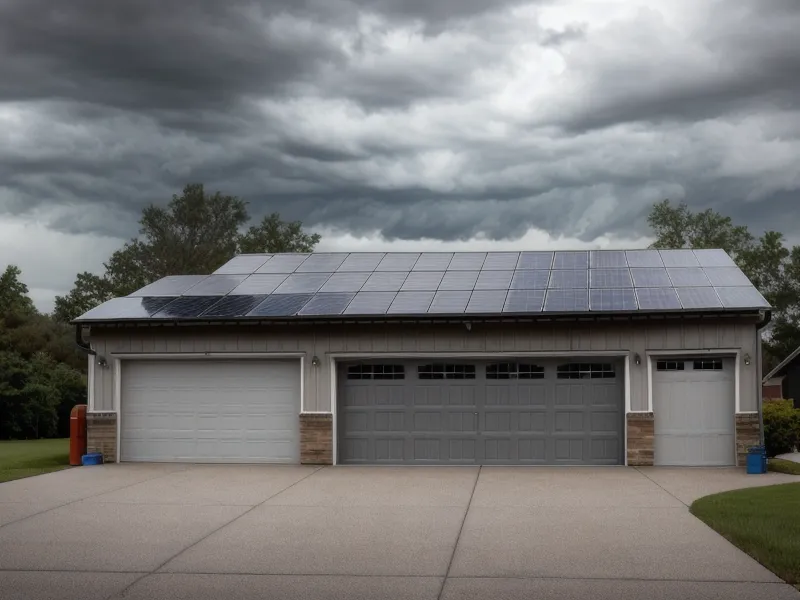
Six weeks into this past hurricane season, I stopped checking the insulin fridge's thermometer like it owed me money. That's not nothing — for two years before that, a flickering porch light sent my stomach straight to the floor. Something had finally changed in how our house handles backup power during a blackout, and it wasn't luck.
Quick disclosure before anything else: some of the links below are affiliate links, and if you buy through one of them, we earn a small commission at no cost to you. We only write about backup power gear we've actually plugged in during a real outage — nothing here is theoretical, and none of it is sponsored content pretending otherwise.
The Night We Stopped Trusting the Truck
My husband's first fix, long before any of this, was embarrassingly simple: run a cable from his truck's 12-volt inverter to my laptop and let the engine idle in the driveway so I could finish a client file. It worked, technically. It also burned through more gas sitting still in our own driveway than the job itself was worth, and by the third outage that year, we both knew it wasn't a real plan.
Brock, who helps him coach our son's team most falls, just shook his head when he heard about the truck trick. He's the kind of guy who won't trust a brand until he's personally watched it fail on a job — plumbing or otherwise — and his skepticism about half the gear we were considering turned out to be useful, even when it was exhausting to sit through.
Insulin has to stay inside a narrow cold range — 36 to 46 degrees Fahrenheit — and once it drifts outside that window for too long, you can't talk your way back into trusting it. That single fact decided, for us, which appliance got priority the moment any backup system came online: the medical fridge first, everything else after.

Gasoline with ethanol in it doesn't sit well for long once it's capped in a can in the garage, and ours had gone stale enough to choke the generator's engine the one night we actually needed it. Between that, the fumes, and the constant trips for fresh fuel, the old setup had already told us everything we needed to know before we went looking for something else.
Our Grid Keeps Catching Us Off Guard
Living outside Houston, you learn fast that the Texas Interconnection runs on its own, separate from the rest of the country's grids, which sounds like independence until a brutal July afternoon shows you exactly how little slack the state built into that system. Who designs for the hottest months of the year and leaves no cushion at all?
Half the calendar year around here counts as hurricane season, and gas stations near us run dry fast once a storm shows up on the radar — reason enough, eventually, to stop building our whole backup plan around a fuel can.
Research has always been my job in this house; I read the specs, compare the claims, and track what everything actually costs us in time before my husband touches a single part. He's not an electrician — nobody in this house is — but the Energy Revolution System blueprints he started with were built to be followed step by step without one, which mattered more to us than almost anything else on the list.
Running the Numbers Before Buying Any Backup Power System
Before any purchase got approved, my husband sat down and actually added up the running watts the fridge, the medical cooler, and my work laptop needed, instead of guessing and hoping. The fridge's starting surge mattered more than its everyday draw, which is the detail that trips up a lot of first-time buyers. We also argued, more than once, about whether a battery-based setup or something closer to a traditional generator made more sense for a family our size, and the honest answer depended on budget as much as on watts — plenty of decisions came down to what could wait another season and what genuinely couldn't.

We looked at a few different paths side by side. I was drawn to a full build, while my husband leaned toward the Power Grid Generator for something simpler, built around resonance-based recovery instead of fuel. We also tested the Orgone Motor for smaller jobs that didn't need the full setup running. Any claim that sounded close to free, unlimited power got read twice before we believed a word of it — that kind of promise is exactly where this hobby tends to attract people who overstate what their gear can actually do. Piece by piece, we were building our own journey to energy independence, not buying a finished one off a shelf.
Modular Beats Massive
Everyone assumes the biggest battery bank wins, and for a while we assumed the same thing. Bigger capacity does mean longer runtime, sure, but it also means a painfully slow recovery once it's drained, a problem if you've only got a short window of sun or generator time to refill it. What we gave up in raw capacity, we gained back in actually sleeping through a storm without a motor droning somewhere outside the window.
Smaller, modular units — the kind you build from the Orgone Motor plans — let you cycle power instead of draining one giant tank to empty and waiting. One unit runs the medical fridge while a second recharges, then they swap. Our garage shelving has turned into actual layers now too: one bin for fuel stabilizer, one for transfer switch hardware, one for extension cords — a backup to the backup instead of a single point that can fail on us the way the old setup did.
The Week Six Shift Toward Energy Independence
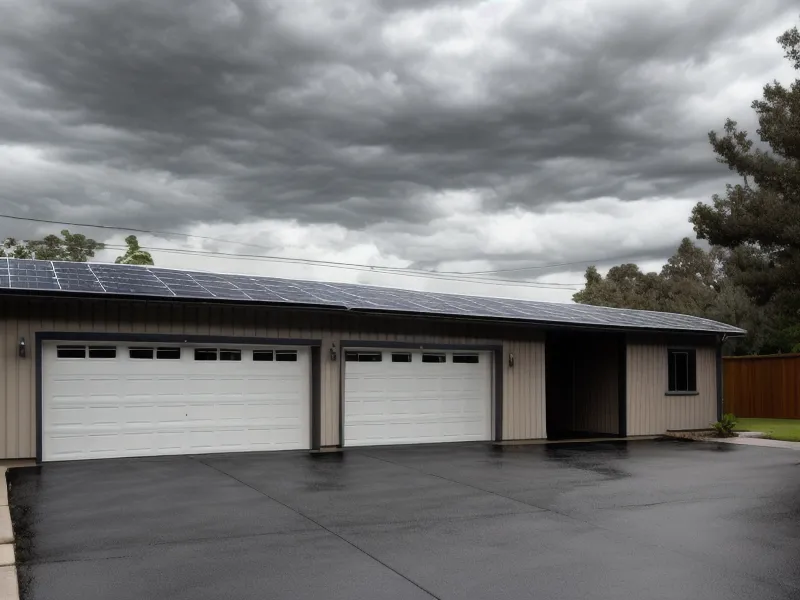
The small weather station we bolted to our back fence a while back has quietly kept a log of exactly how often our power has sagged or died outright, season after season, and that record is part of why we stopped treating this as a one-time fix. Storms change. A setup that survives a mild spring front needs to survive hurricane season too, and the only way to know is to run it through more than one.
During an earlier outage, before any of this was in place, I packed up my laptop and drove to Sugar Land Town Square just to find Wi-Fi strong enough to upload a client's files from a parking lot outside a closed storefront. A missed deadline doesn't care that the power is out; a client still expects the work on time, and losing the router along with the fridge turned a bad night into a genuinely bad week.
By week six, I finally opened the drawer where we keep the spare insulin pen without bracing for bad news, and it was exactly as cool as it should have been — no drama, no second thermometer check to be sure. These days, the first hour of any outage is just three quick checks instead of a scramble: the fridge, the medical cooler, the router. None of this makes us fully free of the grid — we're just further along that spectrum than we used to be, and far enough that a dead line down the street doesn't feel like an emergency anymore.
We've written before about our honest experience with DIY backup power, and nothing we've tried since has beaten it for reliability. If your family is tired of staring at a thermometer every time the sky turns that bruised purple color, the Energy Revolution System is the place we'd point you to start, blueprints and all.
What Would We Tell Selene in Katy?
A reader named Selene, who lives on the third floor of an apartment complex in Katy, has asked often enough in our comments that she's basically become the person other renters look for when they want an honest answer about backup power without a garage or a driveway. Solar sounds perfect for an apartment until you run the math on how few genuinely sunny hours Houston gives you during the thick of hurricane season, versus how fast a stretch of clouds can drain everything back down to nothing.
If there's one thing worth carrying out of two bad years and a slow, expensive education in watts and fuel, it's this: the right backup system isn't the one with the most impressive spec sheet. It's the one you understand well enough to fix yourself at midnight, mid-storm, without calling anyone. That's the whole difference between a family that panics when the lights go and one that just walks to the garage.
| Product | Rating | |
|---|---|---|
| Energy Revolution System Top Pick | 9.2 | Read More → |
| Orgone Motor | 8.5 | Read More → |
| Power Grid Generator | 7.9 | Read More → |
Energy Revolution System
Pros
- ● Reliable backup power without needing gasoline
- ● Step-by-step video guides make assembly straightforward
- ● Perfect for maintaining the cold chain for medications
- ● No noisy engine or toxic exhaust fumes
Cons
- − Requires time to assemble and test
- − Not a pre-built, plug-and-play unit
Nothing on this website constitutes medical, legal, or financial advice. All content is based on the author's personal experience and independent research. Consult a licensed professional for guidance specific to your situation.