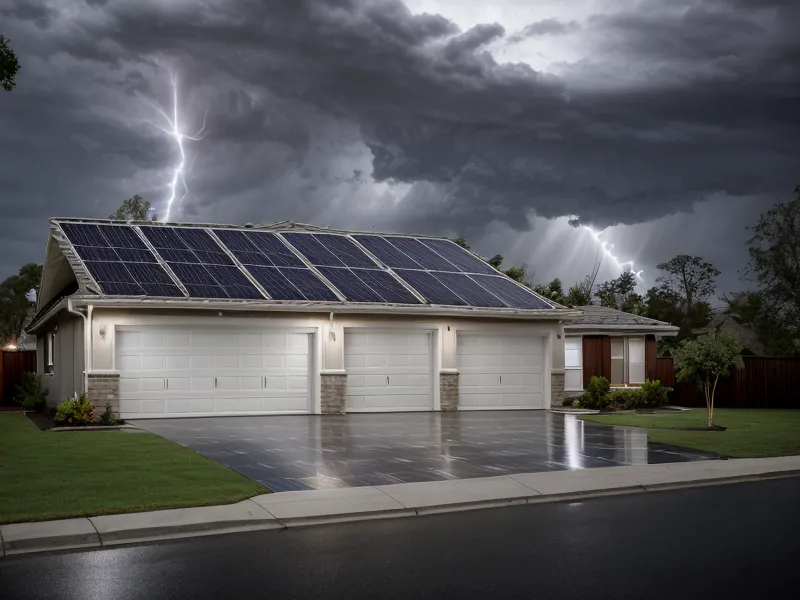
Our old gas generator could be heard three houses down. That was supposed to be reassuring, proof the thing was working, but it never felt like an actual plan for hurricane season, for insulin that has to stay cold, or for a freelance design business that runs on a WiFi connection nobody controls. The idea that one generator equals one backup-power strategy is the biggest myth in this whole category, and we believed it for longer than we should have.
Here's the correction, stated plainly, before we get into how we landed on it: one generator, however large, covers one kind of need. Medical equipment, remote work, and refrigeration each carry a different priority and a different failure point, and asking one loud machine to serve all three is how a family ends up standing in the rain wondering why the extension cord won't reach the window.
The Myth That Started With a Loud Generator
We bought a cheap inverter generator first, the kind marketed as the quiet option for exactly this reason. It wasn't quiet. Close enough to the house to be convenient, it still put a steady drone through the bedroom wall; far enough away to actually be quiet, the cord wouldn't reach half of what we needed powered. That generator sat in the garage for most of a year afterward, a reminder that "quiet on the box" and "quiet in your yard" are two different products.
Neighbors down the block ran their engines from dusk until sunrise, and the smell of exhaust drifted through more than one cracked kitchen window that year, ours included, before we changed anything. Fuel itself turned out to be its own headache. Gasoline left sitting in a garage doesn't stay usable nearly as long as most people assume, which meant a supply we thought was insurance was quietly going stale between storms.
The Medical-Equipment Blind Spot in Most Backup Plans
Our youngest depends on insulin staying within a specific temperature window, and giving that one fridge its own dedicated priority circuit, powered before anything else in the house, settled a question we used to lie awake asking. A neighbor named Dwight reached out through our contact form after last year's outages, not with a long story, just a question about how we'd tested a setup for a family member who depends on medical equipment. He didn't say much more than that, and we didn't ask. He came back a few months later to say the setup he'd pieced together, using what we'd written about priority circuits, got his family through the next outage without incident.
Does More Battery Really Mean More Runtime?
Assuming more battery capacity fixes everything is its own myth, and we fell for it too. A large battery bank we bought early on drained faster than the spec sheet implied; there's a wattage-math exercise worth running before buying anything in this category that explains exactly why, and we won't repeat it here, but skipping it is how that first battery died in an afternoon instead of lasting through the night. Whether a battery or a generator makes more sense for a given layer is its own separate decision, and the honest answer is usually "it depends on what that layer needs to do," not which one sounds more impressive.
Trading Loud for Layered, Room by Room
I was mid-deadline, buried in client files, when a routine thunderstorm knocked the block's power out last month. I didn't notice right away; that was the whole point. The monitor stayed lit, the router kept blinking, and it wasn't until a text from a neighbor asking if we still had power that I even looked up from the file I was working on. That's the actual test of a layered setup: not whether it works, but whether you forget it's running.
Cheryl, two doors down, showed up that same week with a plate of something and an observation we hadn't asked for: our yard had gone quiet while everyone else's still sounded like a small airport runway. She wasn't wrong. Splitting the load across a few smaller, purpose-built pieces: one for the medical fridge, one for the office gear charged in part off a portable solar station, a small gas unit kept in reserve for the air conditioner, turned out to be quieter, cheaper to run one piece at a time, and far easier to move if we ever needed to evacuate toward the coast.
None of the plug-in pieces we chose required rewiring the house or bringing in an electrician to change the panel; the tiered version we ended up with sits on top of the existing outlets, not inside the walls. We're not chasing full independence from the grid, either. There's a wide spectrum between riding out one bad night and our family's path to real home power independence, and most families only need to move a few steps along it, not sprint to the far end. When storm coverage shows waves climbing over Galveston Seawall Boulevard, we're not thinking about disconnecting from the ERCOT grid for good. We're thinking about which two rooms actually need to stay powered until the water goes back down.

What We'd Tell a Family Starting From Zero
Getting to a place where no more melted insulin was even a question changed how we prioritized every layer we added after that. Start with the need, not the wattage total; that's the rule underneath everything else here. Cover the medical equipment first, then whatever keeps the household employed or connected, and treat the whole-house generator as the last layer, not the first purchase. You don't have to buy a $10,000 whole-home system to get this right; a small, dedicated battery for one fridge and a portable setup for a laptop and a router covers most of what actually matters in the first hours of an outage, and those first hours matter more than people expect.
We've also learned to be skeptical of anything promising unlimited free power from a box you assemble yourself; if a claim like that sounds too easy for a grid failure this stubborn, it usually is, and that's a rabbit hole for a different write-up. What we can say is that this same layered setup has now carried us through both hurricane season and a hard winter freeze without turning into its own research project, which is the actual bar for whether a backup-power strategy works: not how it performs in a demo, but how little you think about it once the power is already gone.
Nothing on this website constitutes medical, legal, or financial advice. All content is based on the author's personal experience and independent research. Consult a licensed professional for guidance specific to your situation.