Twenty minutes. That's how long a bargain UPS — one of those small battery backup boxes — from an office supply store kept our son's insulin fridge running before it quit, and that wasn't even during a named storm, just an ordinary hurricane-season outage that barely made the evening news. We'd bought into the biggest myth in backup power without realizing it: that any battery in a box counts as a real plan, whether you're protecting a home office deadline or a fridge full of medication. Two blackouts in the same year taught us otherwise, and the lesson had almost nothing to do with what anything cost.
Quick disclosure, since we're already talking about what we bought and why: this post includes affiliate links, and if you buy through one, we earn a commission at no extra cost to you. Everything mentioned below has actually run in our garage or on the concrete pad behind it — nothing here is a product we read about and assumed would work. We're not electricians, and if your family has medical equipment on the line like ours does, talk to your own doctor and a licensed professional before you wire anything into your house.
The Backup Power Myth That Almost Cost Us the Insulin
Here's the myth: buy the biggest, most impressive-looking backup option you can afford, plug it in, and you're covered. It's not true, and believing it is exactly what left us standing in a powerless kitchen twice in one year. What actually protects a family is matching your setup to the specific loads that matter — starting with medication — and having more than one way to keep those loads running. That's the whole correction, and everything else here is just the detail behind it.
Our youngest needs insulin kept within a narrow safe temperature window, and losing that window isn't a minor inconvenience; it's the medication losing potency. When ERCOT, the operator that runs most of the state's grid, can't keep the lights on through a bad storm, that's not an abstract policy failure for us. It's a cooler on the kitchen counter and a thermometer we watch like it owes us money.

Why We Assumed Bigger Was Automatically Safer
Gas generators were the obvious first answer, the kind sold in rows at the hardware store. Except finding gas in Houston after a storm rolls through is nearly impossible. Lines wrap the block, and a pump with no power is just an expensive paperweight. You can't run one indoors either, not with carbon monoxide in the mix, so it's always sitting out in weather it wasn't built to love. All-in-one portable power stations looked better on paper, but they're sealed boxes: what you buy is what you're stuck with, no room to add capacity later.
Weighing a battery setup against a traditional generator really comes down to what you're willing to store and maintain — fuel doesn't keep forever, and neither does anyone's patience for babying an engine that only starts twice a year. That's part of why we started looking past portable units entirely, toward permanent energy systems over portable generators that wouldn't need a driveway full of gas cans to function.
Building a DIY Energy System We Could Actually Grow
One weekend this past spring, he cleared off the garage bench and started working through the blueprint for the Energy Revolution System. I'll admit I was skeptical — I spend my days in Illustrator and Photoshop, not with a screwdriver in hand, and I expected this to go about as well as our other DIY attempts. It didn't. The step-by-step videos treated the build more like assembling flat-pack furniture than running a science experiment, and none of it required hiring an electrician, which mattered to us since we're not licensed for that kind of work and weren't about to pretend otherwise.
Marketing copy on products like this throws around phrases like "resonance energy recovery" as if it's settled science. Treat that kind of language the way you'd treat any bold claim on a box — test it yourself in a low-stakes way before you trust it with something that actually matters, like a fridge full of medication.
The Cheap Fix That Failed Us Twice
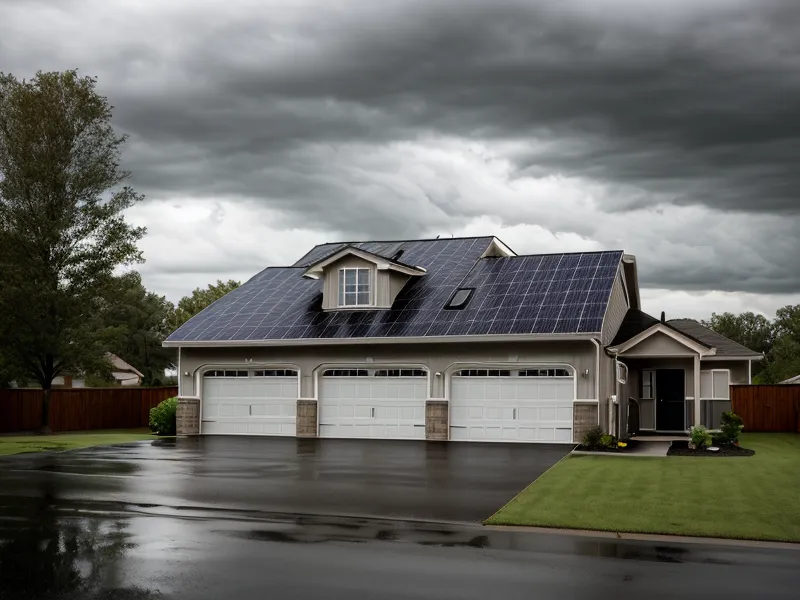
That twenty-minute UPS wasn't our only false start. One system, one point of failure — that was the actual mistake, not the specific device. We'd set up a plan months earlier and never once tested it end to end, and it showed. One evening with the kids parked in front of a movie and rain hammering the roof, it hit us that nobody had actually checked whether the generator would even start if we needed it right then. Nobody had. That's the night the buy-it-once-and-you're-done myth fully died for us.
Our neighbor Cheryl, two doors down, still logs every outage by hand in a paper notebook instead of trusting an app on her phone — her reasoning being that a dead phone battery is exactly the kind of thing that fails you the moment you need it most. After that rainy night, we stopped trusting a single device too, and started thinking in layers instead: one system that runs day to day, a second that can carry the essentials if the first one fails, and a habit of actually testing both before hurricane season, not during it.
What Should Actually Decide Your Backup Size
Sizing a backup system is a lot like buying home insurance — you're not paying for the ordinary Tuesday, you're paying for the one night everything goes wrong at once. When there's medication in the house, that load gets first claim on whatever power you have, before the Wi-Fi, before the TV, before anything else competing for the same outlet. Doing the real wattage math for a fridge, a CPAP machine someone can't sleep without, or anything else that can't just wait is its own project, one we won't pretend to walk through in a single post, but skipping that step is how families end up over-buying an expensive system or under-buying one that quietly can't carry what matters.
A neighbor named Dwight found our site after his own family's last outage, looking for people who'd actually stress-tested a setup around medical equipment instead of just writing about it. His son depends on a home oxygen concentrator, and by the time he messaged us he'd already worked through more wattage math on paper than most engineers do with software. Energy independence isn't all-or-nothing, whatever the ads imply — it's a spectrum between a fridge that stays cold and a house that never notices the grid went down, and most families only need to land somewhere in the middle of it, not at either end.
What you actually do in the first ten minutes of an outage matters almost as much as which device is sitting in the garage — what gets plugged in first, what waits — and it's a decision most families never make until the lights are already off and someone's asking why the Wi-Fi is down.
Three Backup Options We'd Actually Trust
If you're just getting started and a full build feels like too much too fast, a beginner guide for off-grid power is a saner place to begin than diving straight into ours. We've tried plenty of things that failed before landing on these three, and only these three earned a permanent spot in the garage.
The Energy Revolution System is our main setup now, mostly because it doesn't need stored fuel — which was the single biggest selling point once we'd lived through a gas shortage. It's a full blueprint, built to run something as essential as a fridge rather than just topping off phones. The Orgone Motor covers our smaller needs instead; it has a tiny footprint that suits an apartment or a setup where a laptop and a router are really all that's on the line, and we cover that case in more depth in our apartment-safe backup strategy. Then there's the Power Grid Generator, our budget entry point, built around the same resonance-energy claims and priced at $49 for the plans, with parts you can mostly source from a regular hardware store.
The Verdict: Matching Power to What Actually Matters
Plug-and-play boxes leave you stuck the moment your needs outgrow them. If my design workload keeps expanding, a modular DIY setup lets us add capacity instead of buying a whole new unit. Gas units are loud enough to bother the whole cul-de-sac at two in the morning, while a battery system trades that noise for a shorter runway before it needs recharging — and for us, quiet won. The insulin stays cold, my deadlines stay met, and nobody's standing around waiting on a gas line at 2 a.m.
None of this replaces an actual conversation with your doctor if your family has medical needs like ours — that part isn't optional. But if you're tired of gambling on whether the grid holds through the next storm, the Energy Revolution System is where we'd point you first, because it's the one system in our garage that's actually earned our trust twice over.
| Product | Rating | |
|---|---|---|
| Energy Revolution System Top Pick | 9.4 | Read More → |
| Orgone Motor | 8.7 | Read More → |
| Power Grid Generator | 8.1 | Read More → |
Energy Revolution System
Pros
- ● No fuel storage or gas lines required
- ● Scalable modular design for growing families
- ● Step-by-step video guides for non-electricians
- ● Keeps critical medical fridges running indefinitely
Cons
- − Requires initial assembly time
- − Digital-only guide requires a printer or tablet
Nothing on this website constitutes medical, legal, or financial advice. All content is based on the author's personal experience and independent research. Consult a licensed professional for guidance specific to your situation.