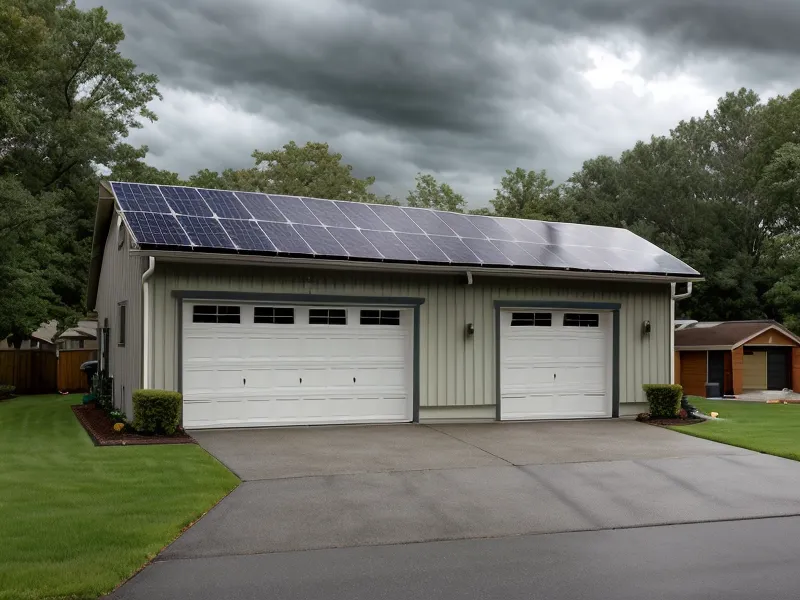
Rain hammering the roof, both boys parked in front of a movie with the volume up to drown out the wind. That was the exact moment nobody in the house had checked the generator. Not because we forgot on purpose. We just assumed someone else already had. By the time the screen went dark, so had the porch light, the fridge, and any illusion that we had a real backup power plan for hurricane season.
Quick disclosure, since we'd rather say it upfront than bury it: a few of the links in this post are affiliate links, and buying through them earns us a small commission at no extra cost to you. Everything we recommend here is something one of us has actually assembled, run, and second-guessed during a real outage — not just read about.
Two Outages, One Lesson About Backup Power
Our youngest needs insulin, and it has to stay inside a narrow temperature window — once a fridge drifts outside that range, the clock on the medication's potency starts moving whether anyone's watching or not. That's what turned our second blackout from an inconvenience into something closer to a deadline. Groceries can wait a while. Medication for our youngest can't, and that difference has reshaped almost every decision we've made about backup power since.
A fridge compressor pulls far more power the instant it kicks on than it does once it's running, a detail that catches a lot of people off guard when they're sizing a unit for the first time, and worth its own separate conversation. We learned the surge problem the expensive way, then learned the noise problem right after: the first inverter generator we bought was marketed as quiet, and it still ran loud enough that we had to keep it out past the fence line just to hold a conversation near the house. Our neighbor Cheryl walked over with a plate of food during one of those test runs, listened for about ten seconds, and asked why we'd bothered buying something "portable" if we still had to shout over it. She wasn't wrong.
Why Did the Gas-Station Backup Plan Keep Failing Us?
Untreated gasoline starts degrading within three to six months without a stabilizer added, which nobody mentions while you're standing in the generator aisle. Add in that hurricane season runs half the year, and you've got a fuel plan that basically requires the discipline of rotating stock like a convenience store. Picking a backup system ends up feeling a lot like buying home insurance — you're spending money on something you hope you never need, and you only find out whether you chose right during the exact week you can't afford to be wrong.
None of that fuel math changes if the device sitting in the garage still depends on gas showing up on schedule. So we went looking at DIY backup power experience that didn't hinge on a supply chain breaking the moment wind speeds pick up, and that search eventually pointed us toward building something instead of buying a bigger version of the same problem.
Comparing a Built System to a Plug-and-Play Generator
We ended up picking a side of that build-versus-buy debate: rather than shopping for yet another gas unit, we went with the Energy Revolution System, a blueprint-style kit rather than a box you plug in and forget. Neither of us is an electrician, and the assembly — mostly DIY electronics work, bridging modules together rather than rewiring the house — still happened without hiring one, which was the bigger surprise since we'd assumed anything battery-based would need a professional. He handled the physical build, I checked each step against the instructional videos, and it genuinely felt like a joint project instead of one more chore nobody wanted.
Here's the tradeoff nobody mentions when they're selling you on "modular": scaling it up later means physically bridging in new components yourself, not flipping a switch on a pre-integrated unit. That's more work upfront, and again every time you expand it. It's also the reason the system can grow alongside my freelance workload instead of becoming obsolete the moment we need more capacity — a pre-made unit locks you into whatever size you bought on day one, which isn't exactly a step toward grid independence.
Primary Build vs. Dedicated Medical Backup: The Real Tradeoffs
Relying on one device for everything is still a single point of failure, no matter how good that device is — so how do you stress-test a plan for the one load you genuinely can't afford to lose? Our answer was to split it: the primary build covers the bulk of the house, and a separate, smaller device stays dedicated to the one thing we're not willing to gamble on.
A neighbor named Dwight found the site through the contact form after last year's storm season and asked almost this exact question. His son runs on a home oxygen concentrator, and he wanted to know if we'd tested any of this for medical equipment specifically, not just laptops and Wi-Fi. He doesn't say much about what that's like day to day, but every time he tries a piece of this setup himself, he reports back with more detail than I asked for. Fair question, and it's basically the one we asked ourselves after the insulin scare. We're not medical professionals or licensed electricians, so talk to your own doctor about medication storage and a qualified electrician about your home's wiring — but here's what's worked for our specific split.
The Orgone Motor is the smaller of the two — a compact device that isn't trying to run the whole house, just the one thing that matters most, which for us is the medical fridge. We also looked at the Power Grid Generator as a lower-cost entry point built around resonance-energy-recovery claims that, frankly, deserve real personal verification before anyone trusts them with something critical; it's newer, with less of a track record than the other two. None of the three raise their voice like a gas engine does, which matters more than expected once a neighbor two doors down could hear every test run.
Choosing Between the Three, Not Just One
This doesn't erase what already happened — the missed deadlines, the ice runs, the general scramble — but it changes what happens the next time the sky turns that particular shade of green-gray. Once we stopped treating securing our home's power without the noise as a someday project and actually built something, the decision got simpler: one system that scales with us, one dedicated backup that doesn't need to, and gas generators demoted to a last resort we hope never to touch again.
Freelance design work doesn't pause for weather. No power for three days used to mean three days of apologizing to clients and missing deadlines I couldn't afford to miss; now the workstation stays live without either of us doing anything heroic about it mid-storm. That shift alone was worth more than the weekends it took to put the pieces together.

If you're trying to decide which of these actually fits your situation: the Energy Revolution System earns the primary spot when you need real capacity — enough to run a fridge, a workstation, and a few lights for days at a stretch — and you're willing to put in a couple of weekends building it. The Orgone Motor makes more sense when you're only protecting one small, non-negotiable load in a space too tight for a full setup, like an apartment or a single medical fridge. And the Power Grid Generator is worth a look only if budget is the deciding factor and you're comfortable being an early adopter on something with a thinner track record. We weren't willing to bet our son's medication on a single point of failure, so we didn't pick just one — and depending on what's actually at stake in your house, you might not either.
| Product | Rating | |
|---|---|---|
| Energy Revolution System Best DIY Build | 9.4 | Read More → |
| Orgone Motor | 8.6 | Read More → |
| Power Grid Generator | 7.9 | Read More → |
Energy Revolution System
Pros
- ● Complete independence from gas station lines
- ● Step-by-step videos make assembly manageable for non-electricians
- ● Easily scalable as your power needs grow
- ● Silent operation compared to traditional generators
Cons
- − Requires manual assembly and setup
- − Initial configuration takes more time than a plug-and-play unit
Nothing on this website constitutes medical, legal, or financial advice. All content is based on the author's personal experience and independent research. Consult a licensed professional for guidance specific to your situation.