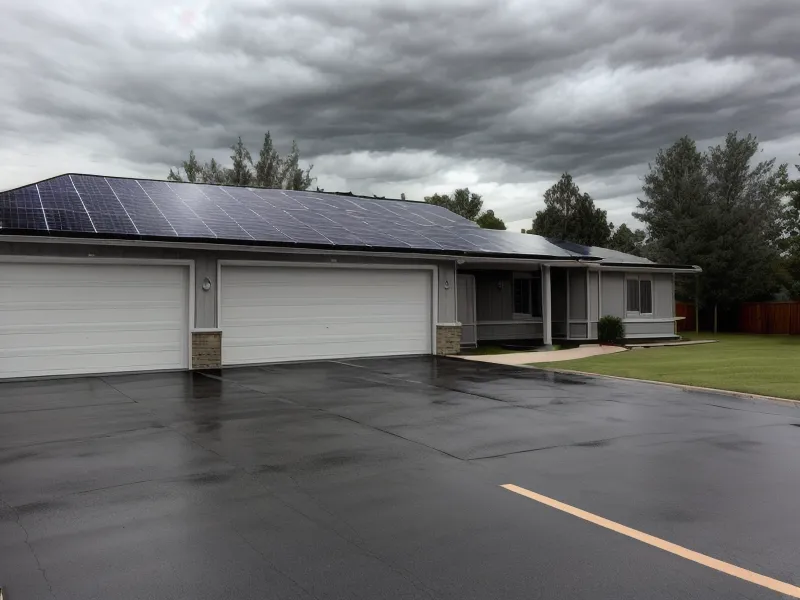
A gas generator and a battery backup system get filed under the same label, "storm prep," but after running both through actual Houston hurricane season, we can tell you they are not the same tool at all. One is loud, needs fuel, and tends to fail exactly when you need it most. The other just works, quietly, in the background. That difference is the whole reason this article exists.
Quick disclosure before anything else: a few of the links below are affiliate links, and if you buy through them we earn a commission at no extra cost to you. We're not electricians, and neither of us has a medical degree. We're just a family in the Houston suburbs who has now tested three different backup setups through real outages, including one where our youngest's medication was on the line.
What Should Get Power First When the Grid Goes Down?
A reader named Dwight emailed us a few months after our second bad outage last year. His son uses a home oxygen concentrator, and his question was blunt: had we actually tested our setup against real medical equipment, or just against a kitchen fridge and some ice packs? It's the right question, and most backup power posts skip it entirely.
Here's our answer, and the criterion we use for every piece of gear now: if it can't keep medical equipment running first, before the WiFi, before the lights, before anything else in the house, it doesn't count as backup power for us. It's just a convenience gadget. Our son's insulin has to stay within a narrow temperature window to remain effective, and that window starts closing fast once a Houston summer afternoon gets into the house. We make this ranking decision in the first hour of an outage, not two days into it, because by then it's too late for anything perishable or medical. We're not doctors, so if you're managing medical equipment during outages, loop in your own physician about your device's specific requirements. We can only tell you what worked for testing ours.
Dwight went quiet for about a month after that first message, which we've since learned is just how he operates. He asks exactly the right question, then disappears to think it over before writing back.
Why Does the Houston Grid Keep Failing Before the Storm Even Peaks?
The ERCOT grid manages power for roughly 90 percent of Texas, and it doesn't fail because of one dramatic moment. It fails because the system has almost no slack built into it. We've sat in evacuation traffic on Galveston Seawall Boulevard before a storm even made landfall, watching the news ticker list rolling outages in neighborhoods the storm hadn't reached yet. That's not bad luck. That's a grid running close to its limits on a normal day, with nothing left over for a bad one.
Going fully independent from that grid sounds appealing right up until you look at what it actually requires: enough stored power and generation capacity to run a house indefinitely, which is a bigger and pricier project than most families need. We're not trying to replace the grid. We're trying to survive the gap between when it fails and when it comes back, and that's a smaller, more solvable problem. Be skeptical of anyone selling a device that claims to make your home fully energy independent for next to nothing. If a claim like that were true, utility companies wouldn't exist.
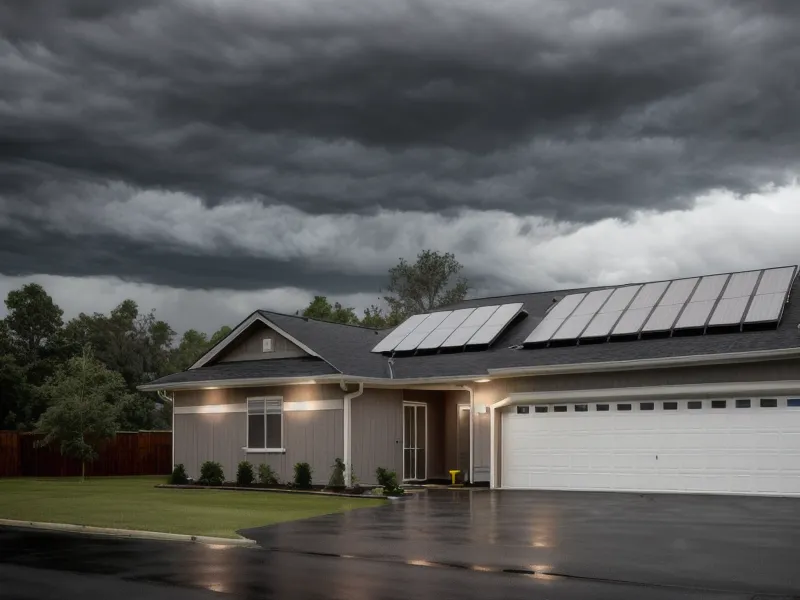
Gas Generator or Quiet Battery System — Which One Actually Works?
Our first attempt at backup power was a gas generator, bought in a panic after our first outage and then left in the shed for a year. When we actually needed it, the carburetor, the part that lets the engine start at all, was gummed up from sitting idle, and my husband spent hours in the rain trying to pull-start a machine that had quietly rotted since the last storm season. Nobody tells you this part about gas generators: the failure happens in storage, long before the storm, and you don't find out until it's too late.
Even when they do start, gas generators are loud enough to bother the whole street, they need stabilized fuel with its own shelf life, and refueling one in August humidity is its own kind of miserable. That sharp fuel smell clings to your hands for hours afterward, no matter how many times you wash them. For anyone in an apartment or a high-rise, this option is usually off the table anyway, since most lease agreements and fire codes forbid running a combustion engine indoors. A quieter battery system solves the noise and fuel problems at once, though it trades away the generator's one real advantage: you can refuel a generator indefinitely, while a battery system only holds what it was charged with until you recharge it. We also needed something that didn't depend on a fuel supply chain that breaks down the moment the Saffir-Simpson Hurricane Wind Scale hits Category 3 territory, when gas stations for miles around lose power at the same time we do.
We Built a Tiered Blueprint Instead of Buying One Generator
Waiting for the city to fix the grid faster wasn't a plan. It was just hope, and hope doesn't keep a fridge cold. So we built a tiered system instead of betting everything on one box: one layer for medical gear and communications, a second for the kitchen, a third for everything else. I did the research and tracked what we were spending against what each layer actually bought us, the same way you'd budget for a road trip. You don't dump the whole gas budget into one tank; you plan for the stops in between.
My neighbor Cheryl, two doors down, is the kind of person who won't trust a claim until she's seen the math, and when she heard what we were building, her first question wasn't about price. It was how many actual hours of runtime we were getting out of it. That's the right question, and it's one most product pages don't answer honestly. Runtime depends on the size of the load you're running and how long you expect the outage to last, and those two numbers matter more than anything printed on a spec sheet.
That's when we found the Energy Revolution System. What appealed to me as a designer was the logic of the whole blueprint. It wasn't one box you plug in, it was a full set of step-by-step video guides for assembling a system yourself, which meant my husband could build it in the garage without hiring an electrician. For anyone renting an apartment or without the space for a full setup, the Orgone Motor has a much smaller footprint, enough for a few essential devices without the noise of an engine. And if you want to start small before committing to anything bigger, the Power Grid Generator is a lower-cost entry point built from common hardware-store parts, a reasonable floor to start at rather than the ceiling you'll eventually want.
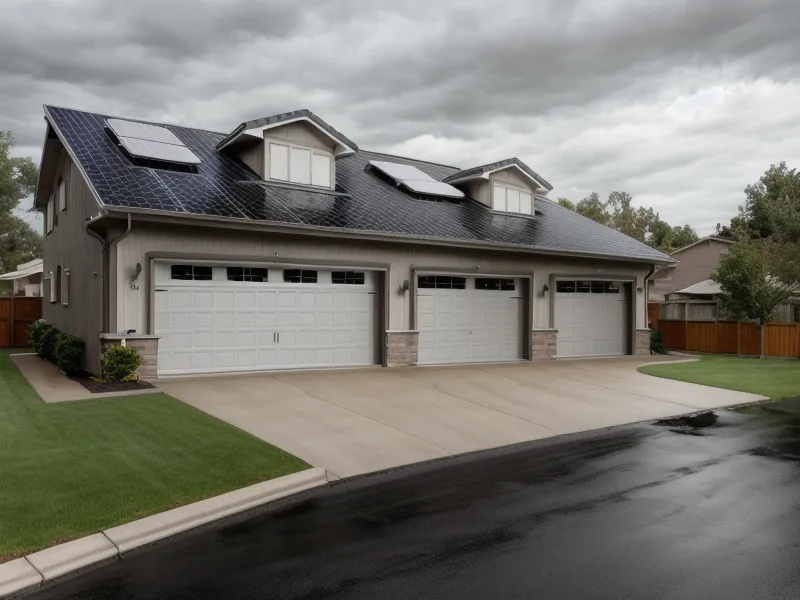
A DIY System Teaches You Things a Plug-and-Play Box Never Will
Most off-the-shelf battery packs are sealed units. If the battery degrades or a cell goes bad, you replace the whole thing, no questions asked and no understanding gained. Building the Energy Revolution System ourselves meant we actually learned how the power moves through the setup, which breaker does what, and what to check first if something stopped working. That's not a small thing when the nearest electrician is also fielding a hundred other calls during the same storm.
We didn't just assume it would work the next time the grid went down, either. We ran drills during mid-winter grid warnings, months before hurricane season even started, specifically so we wouldn't be testing it for the first time during an actual emergency. We hooked up the kitchen fridge, my home office setup, and the small medical fridge we keep for insulin, and we watched the thermometer hold steady instead of guessing. We also started paying attention to other DIY energy systems people were running, since one good result in your own garage isn't the same as knowing how a setup holds up across an entire season of testing.
The clearest proof came during a later storm, when I looked up from a client's design file and realized close to an hour had passed without me noticing the lights had even flickered. The system had handled it quietly in the background while I kept working on a deadline I would have otherwise lost.
Redundancy Covers the WiFi and the Laptop, Not Just the Fridge
The first UPS we ever owned, an uninterruptible power supply, basically a short-term battery for a single device, was a cheap unit from an office supply store, grabbed in a hurry before a storm because it was the closest thing on the shelf. It gave out almost immediately, nowhere near long enough to matter, and we learned the hard way that "battery backup" printed on a box tells you nothing about actual runtime. The UPS for my desktop now is a completely different category of device, sized for the job instead of just the label.
A fridge or freezer also draws far more power the instant it switches on than it does while it's simply running, which trips up anyone who sizes a system off the running-watts number alone and then wonders why the compressor kick trips everything. And it isn't only the big appliances that matter. Losing the router and modem during a multi-day outage means losing the ability to work, to check on family, to see storm updates at all, so that circuit gets its own place in our tiered plan right alongside the fridge, not plugged in last as an afterthought.
Solar Falls Short in Houston Humidity More Than the Ads Admit
Solar-charged backup batteries get marketed like a free refill button, and in mild weather that's close to true. Under the kind of heavy cloud cover that shows up right before and after a hurricane, recharge times stretch out far longer than a panel's rated output would suggest, precisely when you need the recharge most. We still think solar has a place in a backup plan, just not as the only layer, and definitely not marketed as a guarantee it can't deliver on the exact days that matter most.
Do You Need to Go Completely Off the Grid to Be Ready?
No, and we'd be skeptical of anyone who tells you otherwise. You need enough backup to cover the gap between an outage starting and the grid coming back, sized around your household's actual loads, not a generic "whole house" number from a sales page. For us that gap has meant medical equipment and communications first, the kitchen second, and comfort items last, built in layers we could afford one at a time instead of one enormous purchase we'd have regretted.
If you're starting from zero and want the version we'd recommend first, the Energy Revolution System is the one we keep coming back to, mainly because building it ourselves meant we understood every part of it by the time we needed it. The price on the vendor's page can change, so we won't quote a number here, but for a family that's been through two outages too many, understanding our own setup completely was worth more than any convenience a sealed, pre-built box could offer. House or apartment, there's a version of this that fits. The only mistake is waiting for the next storm warning to start figuring it out.
Nothing on this website constitutes medical, legal, or financial advice. All content is based on the author's personal experience and independent research. Consult a licensed professional for guidance specific to your situation.