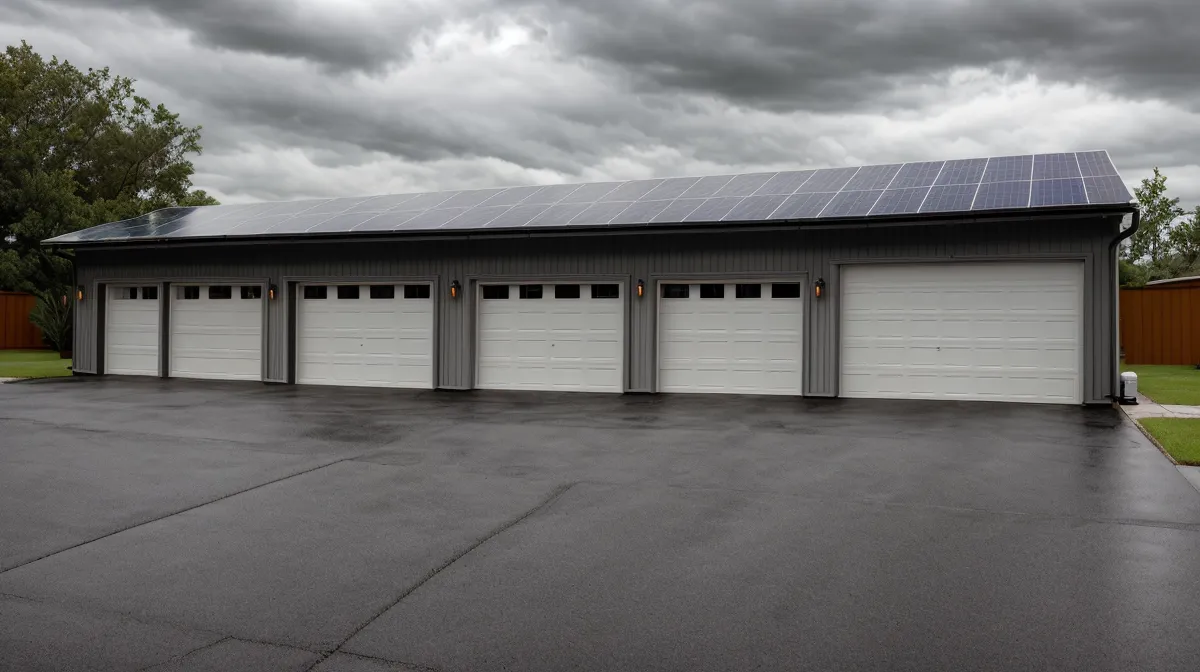
My husband already has the portable cooler's back panel off and a multimeter in his hand before the storm sirens finish their first full cycle. That's emergency preparedness in our house now, not a binder on a shelf but a reflex. Our youngest needs steady medical fridge power for insulin no matter what the grid is doing, and neither of us waits for the lights to actually go out before checking connections.
Storm season here means watching evacuation traffic crawl along Galveston Seawall Boulevard on the news and doing the math on how many hours that puts between us and the first real gusts. We're far enough inland that we rarely evacuate ourselves. Close enough, though, that the grid out here treats every hurricane watch as a personal challenge.
Quick disclosure before the comparison starts: this post contains affiliate links, and if you buy through one of them, we earn a small commission at no extra cost to you. Everything described here is a setup our family actually built, plugged in, and ran through a real outage. None of it is theoretical. If you want the parts list and build guide we used ourselves, that's the Power Grid Generator setup guide.
What's Actually at Stake When the Grid Drops
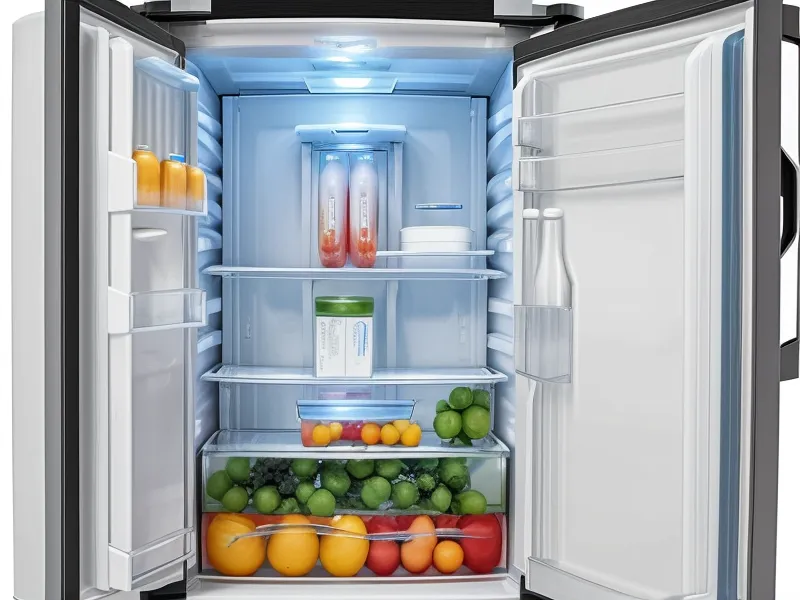
Here's the stake we're actually playing for: insulin has to stay inside a narrow cold range, and once it spends too long outside that window, its effectiveness drops with no undoing it afterward. Neither of us is a doctor. My husband coaches little league, I freelance as a graphic designer, and medical training isn't part of either job description. We follow insulin storage guidance from our own doctor, and we'd tell any reader to do exactly that instead of trusting a blog for medical specifics.
The first hour of any outage turns into a triage exercise. Figuring out which load gets backup power first isn't much of a debate in our house. The medical fridge wins before anything else even gets considered.
Does Switchover Speed Matter More Than Total Power?
Most comparisons stop at capacity: how many watts, how many hours. They skip the part that actually matters for a compressor fridge, which is how long the gap lasts between the grid dying and backup power picking up the load. We learned that lesson the expensive way during an earlier outage, one we laid out in more detail in The Essential-Loads Backup Guide: What Kept Our Medicine Cold and Deadlines Intact. Back then, my design files vanished off an unsaved screen the moment the lights cut. It took a full, panicked minute to realize the real danger wasn't the lost work at all. It was the cooler two rooms away, quietly starting to climb in temperature with nobody watching it.
So why does switchover speed outrank raw capacity on our priority list? Because none of the stored power in the world helps if the gap before it kicks in is long enough to ruin the medicine first.
These days that gap barely registers. Last outage, I didn't even clock that the block had lost power until a client messaged asking if I'd seen the storm news. My monitor never flickered, because backup power had already taken over before anything felt wrong. That's the whole argument for fast switchover in one sentence: the best backup power doesn't announce itself.
The broader battery-versus-generator question for an entire house is a bigger conversation than we need here. We're narrowing in on one appliance that doesn't get a vote in how patient we're willing to be. Before fuel-free options were even on our radar, our backup plan was a traditional gas generator, and I still remember the smell that stuck to our hands for hours after every refill, worse on the thick, sticky days mid-summer brings around here. Gasoline supply gets unreliable fast once a storm is actually bearing down, lines forming and pumps running dry, which is exactly why fuel-free builds started looking appealing in the first place. Noise is its own trade-off worth a separate conversation, but for a sleeping house at whatever hour the power decides to quit, silent wins by default.
Testing a Backup Power Generator Against a Battery Station, Side by Side
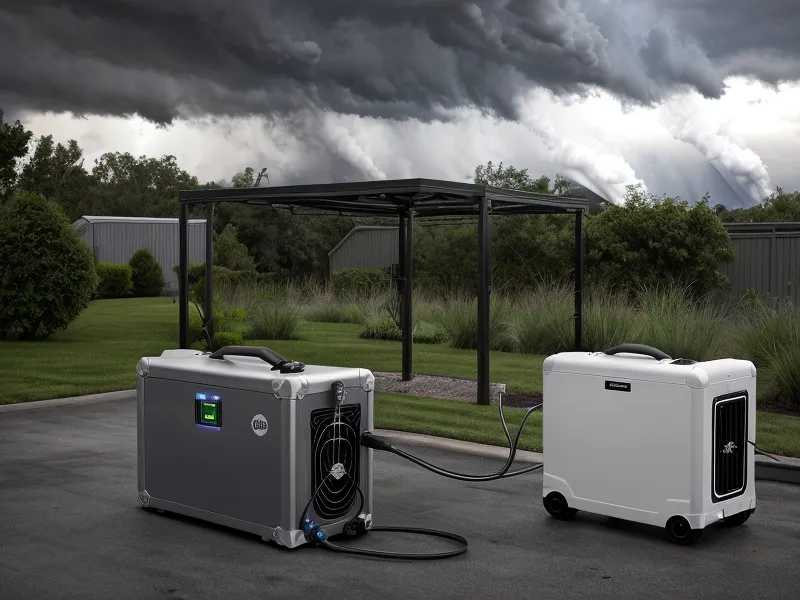
Side by side, a portable power station and a fuel-free generator behave almost like opposites. The power station is plug-and-play. Connect the fridge to the right output and it runs exactly like it would off a wall outlet, no conversion losses, no fuss. The catch is that it's a countdown.
Once the internal battery bank is spent, you're out of runtime until something recharges it, and a compressor fridge drains one faster than its average wattage suggests. Every time the compressor kicks back on, it draws a brief surge well above its steady running number. Lithium packs also wear down a little with every charge cycle over the long run, which is a separate conversation from how much power they hold on day one.
A fuel-free generator setup, like the one detailed in our guide on Power Grid Generator Safety Tips for Using Backup Power Indoors, trades that countdown for a different risk profile. It skips combustion entirely, so it skips the carbon monoxide danger that comes with running a gas engine anywhere near the house too. What it asks for instead is physical assembly and patience. Once it's built, it just keeps producing instead of running out.
Before we landed on either of these, our first real attempt at keeping the insulin cold during an outage was dragging an old chest freezer into service and packing it with however much dry ice we could track down. It worked right up until it didn't. Dry ice runs so much colder than a fridge is built for that we came closer to freezing the insulin solid than protecting it, which would have ruined it just as badly as letting it get too warm. That's the kind of mistake you only make once.
Three Fuel-Free Builds We Put Through Their Paces
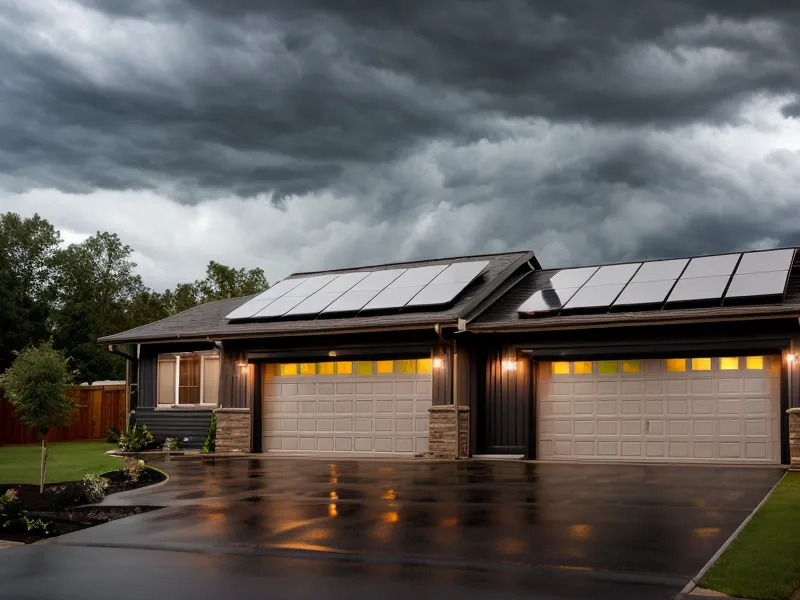
We ended up testing three different fuel-free build systems rather than betting everything on one, partly because of what it took to get here, a story we laid out fully in Why We Stopped Relying on the Texas Grid After Two Blackouts and a Cooler Full of Insulin. A friend of ours, the one who vanishes most weekends to go bass fishing out at Lake Conroe and barely checks his phone while he's out there, asked recently why we even bother with this much off-grid energy backup when a generator from the hardware store would do.
Fair question. The honest answer is that where you land on the spectrum between riding out a few hours and full energy independence is a personal call, and ours got made for us the hard way, twice. Here's how the three options we tried actually stack up.
Energy Revolution System: Whole-House Backup Without Gasoline
The Energy Revolution System is the one we lean on as our main whole-room plan. It's a digital blueprint with full video walk-throughs showing how to put together a setup that generates power without gasoline or a noisy combustion engine running in the yard. It isn't plug-and-play. You're assembling it from the instructions yourself, and how well it performs depends partly on how carefully that build goes. Once it's running, though, it covers the medical fridge and my design workstation at the same time, which the smaller options here can't manage. It also comes backed by a 60-day money-back window through the retailer, which took some of the pressure off committing to a full build before testing it ourselves.
Power Grid Generator: The Budget Entry Point
Parts for the Power Grid Generator build come from a typical hardware store rather than anywhere specialized, which keeps it the budget-conscious option of the three. It leans on the same resonance-based energy recovery approach as the bigger system, scaled down to focus on keeping smaller critical loads like a 12-volt medical fridge running continuously rather than chasing whole-house coverage. Being newer to the market, it doesn't have the review history the flagship system has built up yet, so we'd call any performance claim worth verifying with your own build rather than taking it on faith. That's exactly the kind of budget-floor trade-off worth weighing before committing. What it does offer is a dependable trickle of ongoing power that doesn't care how long the battery it's charging has been running, backed by the same 60-day guarantee if it doesn't work out for your setup.
Orgone Motor: Small Footprint, Smaller Output
For anyone in a condo, apartment, or a house without much extra space, the Orgone Motor build is worth a look. It comes with a clear, illustrated guide and takes up barely any floor space once assembled, which matters if there's no garage or spare closet to dedicate to backup gear. The trade-off is capacity. It's realistically sized for running the medical fridge itself plus a lantern or two, not a full home office setup alongside it. If the essential-load list is short, that's not actually a downside. It's just a different sizing decision than the one we made for our own house.
So Which One Actually Keeps the Insulin Safe?
Pitting a generator against a battery station turned out to be the wrong framing from the start. They solve two different halves of the same problem. A portable power station is what actually protects the fridge in the first sixty seconds of an outage, because its switchover is close enough to instant that the compressor never notices the grid is gone. A fuel-free generator is what keeps that battery from ever running dry three days later, because it's still producing power long after a fixed battery bank would have quit.
So here's where we'd point people, situation by situation. Anyone who already owns a reliable power station and just needs something to keep recharging it indefinitely without a fuel run should look at the Power Grid Generator first. Anyone starting from nothing who wants one build that can realistically cover both a medical fridge and a work-from-home setup gets more out of the Energy Revolution System, even as the bigger investment of the two. And when space is the real constraint, an apartment, a condo, a single bedroom, the Orgone Motor is sized for exactly that, as long as that household accepts it won't stretch past the essentials.
What we wouldn't do again is choose just one of these and call the problem solved. Layer the instant switchover of a battery station underneath the ongoing output of a fuel-free generator, and the fridge stops being something either of us has to think about during a storm at all.
Nothing on this website constitutes medical, legal, or financial advice. All content is based on the author's personal experience and independent research. Consult a licensed professional for guidance specific to your situation.