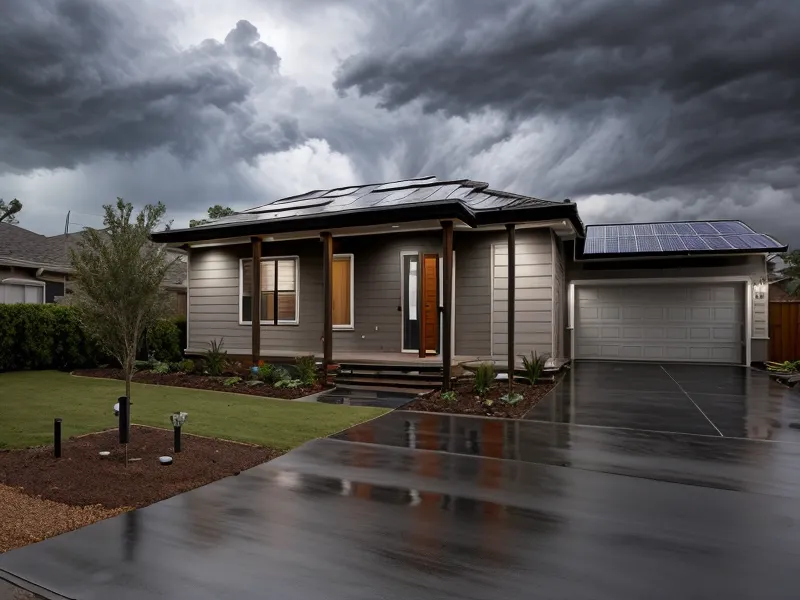
Three browser tabs open, a client's logo proofs up on the second monitor, cursor blinking in an export box — that's where I was the afternoon the power actually dropped last year. I only noticed because the ceiling fan stuttered for half a second before the transfer switch caught the load, and our little emergency power setup did exactly what it was built to do without me lifting a finger. My screen didn't blink. The call didn't drop. I kept typing.
A quick note before anything else: some of the links in this piece are affiliate links, and we earn a small commission if you buy through them, at no extra cost to you. We only write about backup gear we've actually run through a real Houston grid failure, not gear a company mailed us to review.
The Two Things Worth Keeping Powered First
Most outage advice treats a house like one big appliance that's either on or off. Ours doesn't work that way. Our youngest needs her insulin kept cold, and I need my workstation and the router alive long enough to hit deadlines that don't care whether the Texas power grid is having a bad week. Everything else — the TV, the microwave, the porch light — can wait. Deciding which two or three things in a house actually matter is the first real decision in any backup plan, and it has to happen before anyone buys a single box.
There's a version of this piece that hands you a full decision tree for prioritizing a medical device over a router, and we're not going to try to out-write it here — that math deserves its own space, not a rushed paragraph. What we can say is that the first hour after the power drops matters more than people expect: what gets checked first, what stays plugged in, and what gets unplugged out of habit instead of need. Keeping the router and a laptop alive during a long outage is its own small project too, and figuring out how long a battery bank actually holds a home network up under real use is a longer conversation than fits here.
Why Gas Generators and Pocket Solar Panels Kept Failing Us
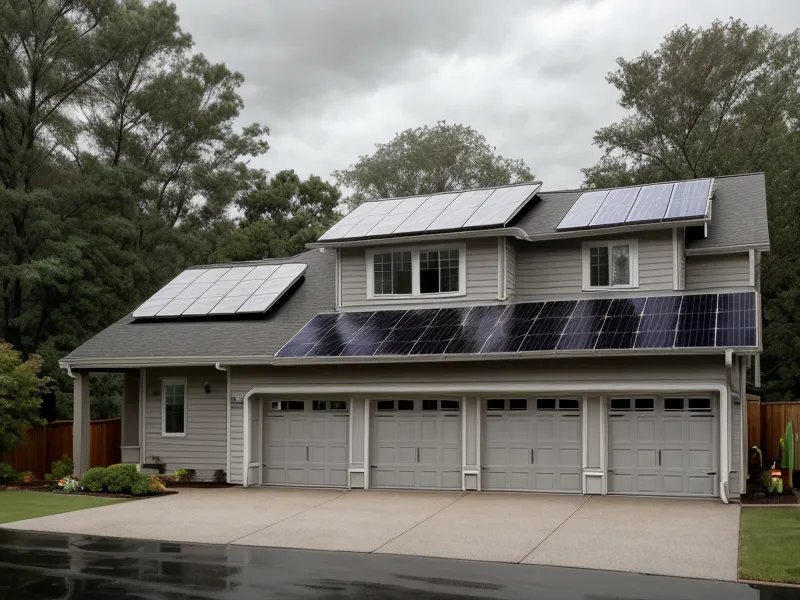
Gas generators solve the power problem and create three new ones: they're loud enough to wake a cul-de-sac, they need gallons of fuel stored somewhere in a hot garage, and fuel sitting around for months doesn't stay as reliable as people assume — depending on a stored fuel supply is a bigger liability than most first-time buyers realize. The foldable solar panels we tried next failed a different way. They needed most of a daylight to bring a phone from empty to half-charged, and hurricane season here doesn't exactly deliver clear skies. Solar recharging looks great on a spec sheet and considerably less great under real storm clouds.
We tried a shortcut once. During an early outage, we ran an extension cord from our fridge to a neighbor's gas generator two houses down. It kept the compressor running for about an hour, right up until the cord got hot enough that unplugging it felt like the safer bet than pushing our luck any further. It taught us that a backup plan you're borrowing from someone else isn't really a plan.
Apartments make this harder, not easier. A reader named Selene Krakowski, who writes in fairly often from a third-floor unit in Katy, pointed out that combustion engines and enclosed balconies don't mix — carbon monoxide doesn't care about lease terms, and most buildings ban gas generators outright for exactly that reason. She's become something like the go-to voice for renters in our comment section, and she's right that most backup guides quietly assume everyone owns a driveway and a garage. We ended up pointing people like her toward the Orgone Motor instead, small enough for a closet and with enough output to keep a fridge and a couple of essential devices running without an engine anywhere near the building.
Comparing DIY Generator Kits and Battery Backups by What They Solve
Once we admitted a plug-and-play whole-house generator was priced like a small SUV, we started sorting the DIY options by what problem each one actually solves instead of by which one sounded most impressive. A battery-based setup runs silently and won't push exhaust anywhere near the kitchen, but it has a ceiling on how long it lasts before it needs recharging — a generator trades that quiet for a fuel tank that keeps running as long as you keep feeding it. Neither is the objectively correct answer. It's a trade-off between noise and endurance, and which one you want depends on whether your neighborhood tends to lose power for six hours or six days.
My husband ran the idea by Brock Fuentes first, who helps him assistant-coach our son's little league team and works as a licensed plumber with strong opinions about nearly every system in a house. Brock only trusts brands he's personally watched fail on a job gone wrong, and that alone talked us out of the first generator we almost bought before we ever reached checkout.
There's also a floor to how cheap you can go before a system stops being a real backup and starts being a placebo, and figuring out where that floor sits for your own house is worth doing before spending anything. Full energy independence — the fridge, the office, the lights, all of it, never noticing an outage at all — sits at the far end of a spectrum that starts with "the fridge survives the night" and ends somewhere much more expensive. Most families land somewhere in the middle, and that's a fine place to land.
This is also where we'd tell you to be skeptical of anything that claims to pull more energy out of a system than you put into it — that kind of claim deserves real scrutiny, not blind trust, even from products we ended up liking ourselves. We built the Energy Revolution System ourselves, a blueprint-and-video kit rather than a box that shows up pre-assembled, because once we read past the sales page the underlying build logic held up under our own questioning. If you want the cheapest possible entry point instead, the Power Grid Generator leans on mostly hardware-store parts, and it's new enough on the market that you're still somewhat on your own for outside reviews. We compared both of these against traditional setups in our journey beyond gas generators, if you want the longer version.

Building the Backup System Without Calling an Electrician
We built ours on a weekend, on the concrete pad behind our garage that's turned into our permanent outdoor test spot for anything with a plug or a fuel tank. My husband ran the actual assembly while I checked his work against the diagrams, a division of labor that's held up through every project since. None of it required rewiring the house or bringing in an electrician for the build itself. The one place we didn't cut corners was the transfer switch tie-in, which is exactly the kind of step worth paying a licensed electrician for even on an otherwise DIY project.
Before we ever priced out parts, we did rough runtime math on paper — how many watts the fridge draws, how many the router and a laptop need, how long we wanted it to last without a recharge. The actual formula for sizing a system to your specific appliances is a longer conversation than fits here, but skipping that math entirely is how people end up with a system that's either wildly oversized or quietly inadequate. We tested the build on the big fridge first, right there in the garage, next to the shelving bins we keep labeled for fuel stabilizer and transfer switch hardware instead of digging through a junk drawer mid-storm. It handled the compressor kicking in without a stutter, which is a smaller relief than it sounds like until you've heard a system choke on that exact moment. For a closer look at the hardware side, we've written separately about the best portable stations for home offices that we used as a benchmark while building.
What Happened the First Time the Grid Actually Failed on Us
The first real grid failure after we finished the build came before hurricane season had even officially started, which is fairly normal for this part of Texas. My husband didn't scramble. He checked the weather station bolted to our back fence, saw the wind hadn't peaked yet, and left the system alone instead of second-guessing it. I stayed at my desk, finished the export I mentioned earlier, and sent the files without ever refreshing my email to check whether the outage had knocked out our connection too.
We've since run the same system through a full year of Texas weather, not just the storm months, because a backup system that only gets tested once a year during a hurricane is a system you're trusting on faith. A random spring thunderstorm or a summer brownout tells you more about how the system actually behaves than any spec sheet does.

How Do You Know Your Backup Power Is Actually Ready?
You'll know it's ready when you can answer three questions without guessing: what actually needs to stay on, how long it needs to last, and what you'll do the moment it starts underperforming. A single system covering everything is rarely the right answer. Most families are better served layering something small and quiet for the essentials with a bigger option in reserve for anything longer, rather than betting the whole house on one box.
If you're starting from zero, a smaller setup like the Power Grid Generator is a reasonable way to test the idea on your own essentials before committing further. If you're ready to build the fuller system the way we did, the Energy Revolution System is the one we'd point a neighbor toward first. Either way, don't wait for the forecast to turn ugly before finding out whether your plan actually holds up.
Nothing on this website constitutes medical, legal, or financial advice. All content is based on the author's personal experience and independent research. Consult a licensed professional for guidance specific to your situation.