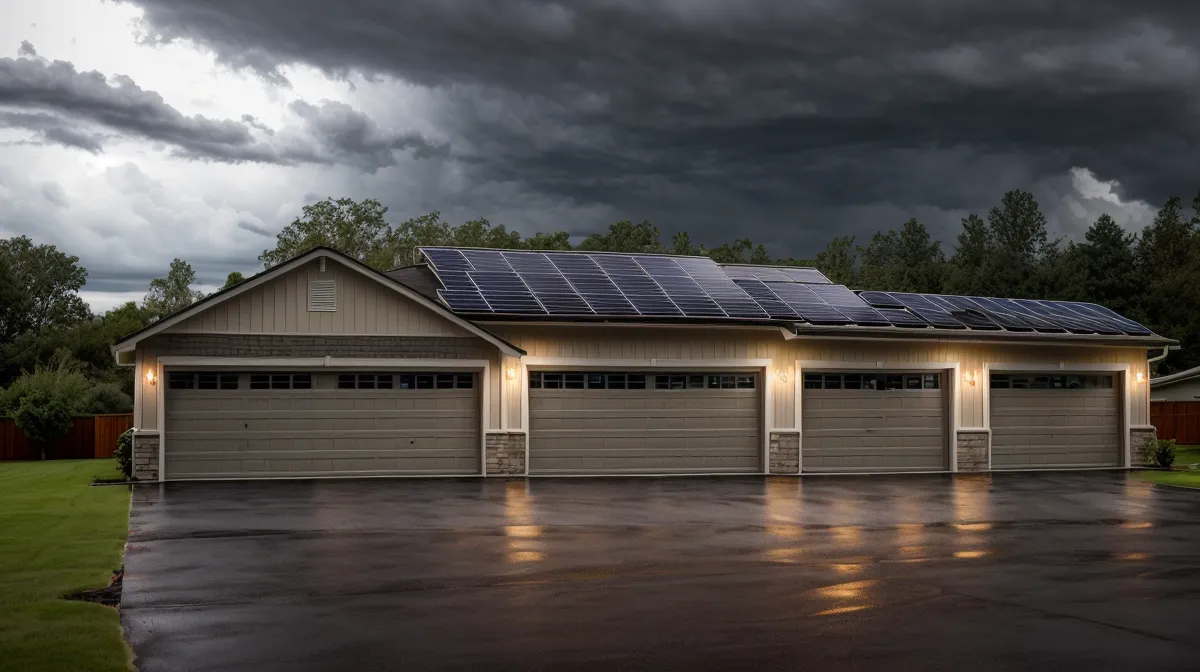
A generator that starts every time beats one that promises more watts and stalls the moment a compressor kicks on. That tradeoff sits at the center of most propane generator advice for hurricane season, and most roundups skip past it to list running-watt numbers instead. We found the gap between those two things the hard way, across two separate outages in the same year, and it rebuilt the way we think about backup power from the ground up.
Quick disclosure before the technical part: this post contains affiliate links, and if you buy through one we earn a commission at no extra cost to you. Every backup power setup and build guide mentioned below is something our household tested against an actual Gulf Coast blackout, not something pulled off a spec sheet. Our full disclosure policy is posted elsewhere on the site if you want the details.
Six Months of Hurricane Season, Zero Guarantees
The official Atlantic hurricane season runs six full months, from June 1 through November 30, which means half of every year gets spent half-watching the radar and wondering if the next disturbance swings toward the coast. We treated that stretch casually right up until our second multi-day outage, when a transformer blew two streets over and took the whole neighborhood down with it.
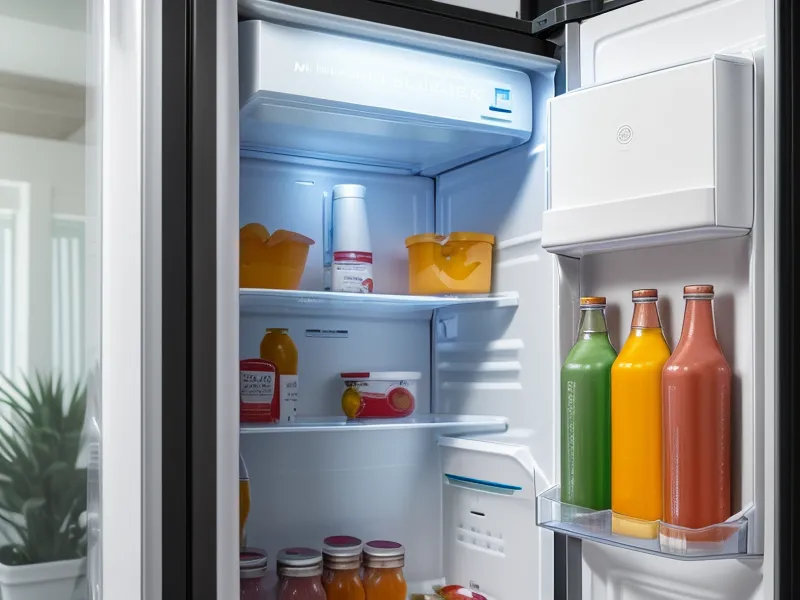
My wife was elbow-deep in branding files for three different clients when her workstation died mid-save, and I was out in the garage trying to improvise cold storage for our youngest's medication. Unopened insulin has to stay within a narrow refrigerated range to remain safe and effective, and watching a thermometer creep upward while sirens went off somewhere nearby is a specific kind of panic we never want to repeat. We're not electricians or medical professionals — talk to your own doctor about your family's exact storage needs — but that evening is what forced us to rethink our entire backup power setup.
Propane's Shelf Life Doesn't Guarantee Supply
Most homeowners' first backup purchase is a traditional generator, and ours was too, reasoning the way most new buyers do. Propane doesn't gum up a carburetor the way sitting pump gasoline does, and a sealed cylinder can sit in a garage for years without going bad. Both of those claims are true, which is exactly why propane tops so many hurricane preparedness lists.
What those lists leave out is the math. Federal rules cap a standard 20-pound propane tank at roughly 80 percent of capacity — about 4.7 gallons of usable liquid fuel — to leave room for the gas to expand in summer heat. Running a refrigerator, a window air-conditioning unit, and a couple of home office computers off that single tank gets you somewhere between ten and fourteen hours before it's dry. Sizing a backup plan around the tank you start with, instead of the fuel stops you can actually count on mid-storm, is a lot like budgeting a road trip around a full tank of gas while ignoring whether any station along the route is even open. By day two of a real blackout, the refill station down the road usually has a line around the block, or has lost power itself and can't run its own pumps.
Noise turned out to be the other half of this lesson, and we learned it before we even owned a propane unit. Our first backup purchase was a cheap inverter generator — it ran fine on gasoline, but it was loud enough that running it anywhere near the bedroom windows meant nobody in the house slept through the night. It went back into the garage after one outage and never came back out. On a tight suburban lot, that noise-versus-output tradeoff matters as much as fuel type, which is part of why a couple of the fuel-free blueprints further down this page exist at all. Cheryl, our neighbor two doors down, still shows up every storm season with a plate of food and a pointed question about whether the tank's actually full this time — fair, because for a while the honest answer was no.
We cover how to rank which circuits matter most before the generator even starts in our essential-loads backup guide, and in our house that ranking isn't optional — our youngest's medication gets its own protected circuit before anything else does. Getting power there safely matters as much as generating it. Running the wrong cord loses you wattage to voltage drop you already paid for at the tank, which is why we stopped using whatever extension cord was sitting in the garage and switched to the best heavy duty extension cords for emergency generator use. If you want the full wattage math for sizing a generator against your own appliance list, that's a separate calculation worth running before you buy anything — this piece is about the fuel and format decision, not appliance-by-appliance sizing.
Don't Trust the Sticker Wattage on a Dual-Fuel Generator
Shopping guides love to push dual-fuel generators because they can toggle between gasoline and propane, and that flexibility is real. When gas stations are boarded up and the propane truck hasn't come through, being able to burn whatever's on hand matters. What most of those guides skip is the output cost of that flexibility. Propane carries less energy per unit of volume than gasoline, so a dual-fuel engine's running wattage — the steady output it holds once it's going, not the harder jolt it needs to start up — drops by roughly 10 to 15 percent the moment you switch the dial over to propane. If your load list is tight, a refrigerator compressor kicking on at the same moment as a desktop and a couple of box fans, that lost surge capacity is the difference between riding out the spike and tripping the breaker at the worst possible hour.
None of this is a project to improvise on the fly. Backfeeding a generator straight into your home's wiring without a proper transfer switch is a safety problem and a code violation on its own — a transfer switch isolates your house from the incoming utility line so the generator can't send power backward down it, and that's exactly the kind of step where you call a licensed electrician instead of winging it with a double-male extension cord. Once we understood both the wattage penalty and the fuel supply problem, a single combustion generator stopped looking like a complete plan on its own. The households that stay calm through a storm usually have a second, fuel-free option sitting in reserve for when the propane truck simply doesn't show.
Choosing Your Backup Option
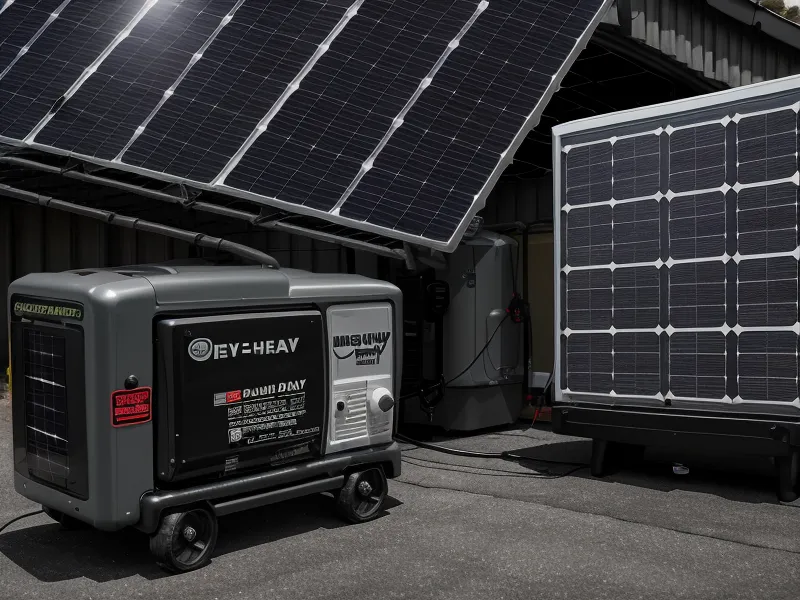
We tested physical generators side by side with a handful of independent DIY build guides to see which ones held up against a real Gulf Coast outage instead of a quiet backyard demo. Three options came out ahead for different households, and none of them is the right call for everyone — the honest answer depends on your square footage, your noise tolerance, and how much hands-on assembly you're willing to take on.
Energy Revolution System: Skipping the Fuel Line Entirely
When the propane trucks stop running and the local distributor's lot sits empty, relying on physical fuel at all starts to look like the weak link in any energy-independence plan. That's what pushed us toward the Energy Revolution System, a digital blueprint with step-by-step video instructions for building an independent backup power source from parts you source yourself, instead of stockpiling tanks or gas cans in the garage. My wife was skeptical at first that a non-electrician like me could put something like this together, but the build guides turned out to be genuinely straightforward to follow. It still requires manual assembly — nothing shows up pre-built on a pallet — and the full family build log is in our Energy Revolution System review if you want the detailed walkthrough. Check the vendor's page directly for current availability and package details.
The Orgone Motor for Apartments and Townhouses
If you live in a townhouse, a condo, or a tight subdivision where running a noisy combustion generator outside isn't allowed at all, the Orgone Motor is worth a look. It's built around a much smaller footprint than a whole-house system, with a guided build process aimed at essential-device loads rather than central air or a full kitchen. The trade-off is capacity — it won't run your household or cycle an air conditioner — but for LED lighting, communication devices, and keeping a small DC cooler going, it's a quiet option with no exhaust to vent outside. Pricing and guide variations are best confirmed directly on the vendor's site.
Power Grid Generator: A Low-Barrier Starting Point
For households that want a starting point without committing to a full workshop build, the Power Grid Generator blueprint is built around resonance energy recovery principles, with a shopping list made up of items you can find at an ordinary hardware store. It's a newer concept with a shorter community track record than the others on this list, so treat it as a practical plan-B rather than your only line of defense if a storm catches you with limited prep time. The vendor's checkout page has the current package terms and availability.
Your Energy Independence Checklist Before the Next Storm
The last time our power came back in the middle of the night, nobody even noticed until morning — I walked into the kitchen, pulled the filter and the grounds the way I do every single day, and made coffee without once checking how many hours of fridge time we had left. That's the real measure of whether a backup setup works: not whether it looks impressive on a spec sheet, but whether a blackout quietly stops registering as an emergency. Not dramatic. Just normal.
If you're re-evaluating your setup before the next storm gets a name, start with the fuel question first. Decide whether you want a propane generator you refill from a tank, a fuel-free build like the Energy Revolution System, or both running side by side as backups for each other. Pairing a reliable propane generator with a fuel-free blueprint is what actually gives a household room to outlast whatever the Gulf decides to send next.
| Product | Rating | |
|---|---|---|
| Energy Revolution System Top Pick | 9.2 | Read More → |
| Orgone Motor | 8.4 | Read More → |
| Power Grid Generator | 7.9 | Read More → |
Our top pick in that comparison carries a 9.2 rating, and the appeal of the Energy Revolution System is almost entirely about what it removes from the equation rather than what it adds. There's no fuel line to stand in, no tank to haul to a refill station, nothing to gum up — just a digital build guide with video walkthroughs written for someone who has never touched a soldering iron before. It's scoped to carry essential home office equipment and a medical fridge, not a whole house, and that's the honest limit of it. The real catch is that it ships as instructions, not hardware: you assemble it yourself from parts you source, and what you get out of it depends on how carefully you follow the build.
Nothing on this website constitutes medical, legal, or financial advice. All content is based on the author's personal experience and independent research. Consult a licensed professional for guidance specific to your situation.