
Thirty-seven degrees Fahrenheit. That's what the garage group text read on day three of an outage last year, our youngest's insulin fridge holding right at the edge because we'd finally stopped guessing about emergency power and started testing it for real. Families across hurricane-prone parts of Texas ask us some version of the same question: which portable power station actually keeps a home office running and a fridge cold, without turning family safety into a science project. This roundup is our answer, built from actual testing instead of spec-sheet promises about energy independence.
Quick disclosure before we get into it: some of the links below are affiliate links, and if you buy through them we earn a commission at no extra cost to you. We only recommend backup power we've actually run during a real outage, with our own fridge on the line.
Why Our Gas Generator Failed During Hurricane Season
Our first attempt at backup power was a standard gas generator, and it taught us everything we didn't want in a system. Loud enough that a neighbor mentioned it more than once. Fuel had to be stored somewhere in the house, in cans neither of us loved having around the kids. One neighbor's generator roared through an entire storm, loud enough to hear over the rain through closed windows, until it just stopped, dead mid-downpour, out of fuel two hours before the worst of it passed. Ours never got that dramatic, but when the tank ran low near 2 a.m. and the outage kept stretching, I made three separate runs chasing bags of ice, restocking the cooler because the generator wasn't something either of us trusted to run unattended overnight. It didn't work. Ice buys hours, not days, and by the third trip the gas station had sold out anyway.
Gas generators still put out more raw power than most portable stations, and if you need to run a whole house, that tradeoff between noise, fuel, and output is a real one to weigh. But storing gallons of fuel is its own fragile supply chain — every neighbor on the block wants the same gas station to still have both fuel and ice, at the same time, during the same storm. What we needed instead was something quiet enough to sit indoors, safe enough not to worry about fumes, and reliable enough that the first hour after the power died wasn't spent troubleshooting a machine. That's what pushed us toward more robust standalone systems like the Energy Revolution System instead of a box off a shelf.
How Much Power Does a Family Actually Need?
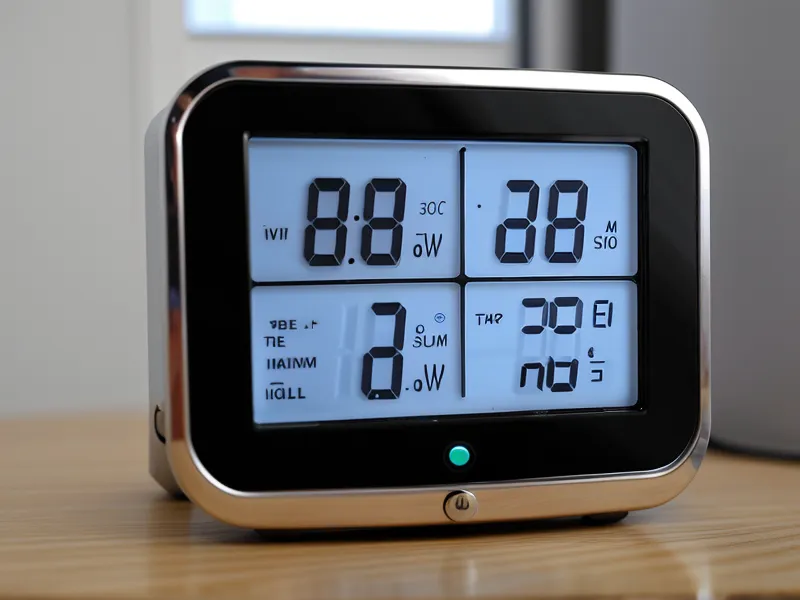
This is the question we get asked the most, and the honest answer is: less than you'd think, and more precisely than a generic size chart will tell you. Running the actual math, adding up what you need to keep alive and not what you'd like to keep running, is its own exercise we've walked through step by step elsewhere. For most families, that's a fridge, a router, a couple of laptops, and some lighting, not the whole house.
We're not electricians, and neither of us wanted to become one. That mattered more than any spec sheet when we were comparing units: could we set this up ourselves, safely, without hiring someone out for a full transfer switch? For anything that ties into your home's wiring, talk to a licensed electrician before you touch a breaker panel. A standalone portable unit with an extension cord running to it is a different, much lower-stakes project.
What Matters More Than Watts?
He's the one who tests every unit before it gets anywhere near an outage that matters, and his short list is the same every time: can it run indoors without fumes, can it hold a steady charge for our son's insulin fridge, and can it do that quietly enough that a client call doesn't pick up engine noise in the background. A power station that trips or surges the moment a compressor kicks back on isn't just inconvenient; it's the whole ballgame for something keeping medication cold.
Our friend Miriam is the one who caught the detail we'd both missed. She's the type who always flags the edge case everyone else glosses over, and when we were comparing units for the fridge, she asked what happens the instant the compressor cycles on, not just what a unit does while it's idle and running steady. That single question changed which system we trusted for anything medical. If you want the full breakdown of how we sized ours for a fridge and freezer running the whole time, we wrote that up separately: choosing the right battery backup for fridge and freezer units. Whether a full setup like that beats a cheaper patchwork of smaller devices is a longer comparison of its own.
Connectivity matters too, more than people expect. A blackout that also kills the router means no video calls, no way to track a storm, no way for the kids to reach anyone if a cell signal gets spotty. Keeping a laptop and a router alive through a multi-day outage is worth planning for on purpose instead of as an afterthought.
The "Free Energy" Claims We've Learned to Question
A guy from our neighborhood Facebook group, Angus, has a habit of showing up in our driveway with some new gadget already halfway explained before we've said hello. That's how we ended up testing our first resonance-based generator kit, and it's also how we learned to read claims like "free energy" or "self-sustaining" with a raised eyebrow. Some of these devices genuinely work as a supplemental layer. None of them replace understanding what a device can actually do versus what the sales page says it does.
Energy independence isn't all-or-nothing, either. There's a whole range between a single battery pack in a closet and rewiring a house off the grid, and most families land somewhere in the middle, layering a few tools instead of committing to one extreme. That's the frame we used when picking what to actually test.
Our Top Picks for Family Backup Power
We tested three specific systems side by side, over more than one storm season at this point, because summer heat and a winter freeze ask different things of a battery, and a single mild-afternoon test doesn't tell you much. None of these are doomsday gear. They're practical tools for a suburban house that needs the lights on and the files saving.
Why the Energy Revolution System Earned Our Top Pick
The Energy Revolution System is what we landed on after testing all three. It's a complete blueprint, not a plug-and-play box off a shelf, and setting it up ourselves (no electrician, no rewiring) was most of the appeal. He handled the build and testing himself, and it came together in an afternoon, not a lost weekend.
It doesn't burn fuel, so there's no engine noise bleeding into a client call, and it kept the fridge and a laptop running through the outage that mattered most. It's the closest we've come to real energy independence without anyone in a truck showing up to install it for us.
The Orgone Motor: A Smaller Layer, Not a Whole Solution
The Orgone Motor is the one we'd point a condo or apartment toward. Small footprint, enough output for phones, tablets, and a fan, nowhere near enough for a kitchen. It's not meant to be the whole plan. It's a second layer, the kind of thing that goes beyond the gas can sitting in the garage as your only backup.
Is the Power Grid Generator Worth It on a Tight Budget?
If cost is the deciding factor, the Power Grid Generator is worth a look. It leans on resonance energy recovery and parts from a regular hardware store, which means more assembly and fewer reviews to lean on than the other two. How far a genuinely bare-bones budget setup can stretch is its own longer conversation, one we've covered in more detail elsewhere. For something keeping medication cold, we weren't willing to find out the hard way, so this stayed our backup's backup rather than the main system.
What We'd Tell Any Family Starting From Zero
Start with what you actually can't lose (medication, a work deadline, a way to reach someone) and size backwards from there, the same way you'd set a home insurance deductible around what you genuinely can't afford to replace. Layering matters more than any single box: one system for the fridge and office, smaller units for the kids' devices, so one failure doesn't take everything down at once. He still coaches little league on weekends, and the two of us walk the loop at Memorial Park most Sunday mornings; one of the only routines a storm can't touch anymore, since power at home stopped being the variable it used to be.
Solar recharge sounds great on a spec sheet, and how realistic it actually is during a week of storm clouds is worth asking before you count on it; that's a deeper comparison than we can do justice to here. No more overnight runs for ice that's already sold out by the time I get there. No more missed client deadlines because the monitor went dark. We're not doctors, and you should talk to your own healthcare provider about safe medication storage specifics, but having power we trust changed what a storm actually costs our family, and that's the whole point of testing any of this in the first place.
If you're getting ready before the next storm season instead of during it, start with the Energy Revolution System. It's the one running our fridge and our home office right now, storm or no storm.
| Product | Rating | |
|---|---|---|
| Energy Revolution System Top Pick | 9.3 | Read More → |
| Orgone Motor | 8.6 | Read More → |
| Power Grid Generator | 7.9 | Read More → |
Energy Revolution System
Pros
- ● No fuel or noisy engines required
- ● Step-by-step videos make DIY easy for non-electricians
- ● High capacity enough for refrigerators and home offices
- ● Massive long-term savings over retail power stations
Cons
- − Requires some initial assembly and setup time
- − Not a single 'plug-and-play' box from a retail store
Nothing on this website constitutes medical, legal, or financial advice. All content is based on the author's personal experience and independent research. Consult a licensed professional for guidance specific to your situation.